Dumpster Gang Solo Guide
One-raccoon raids: loot priority, chaos discipline, and surviving without a rescue squad.
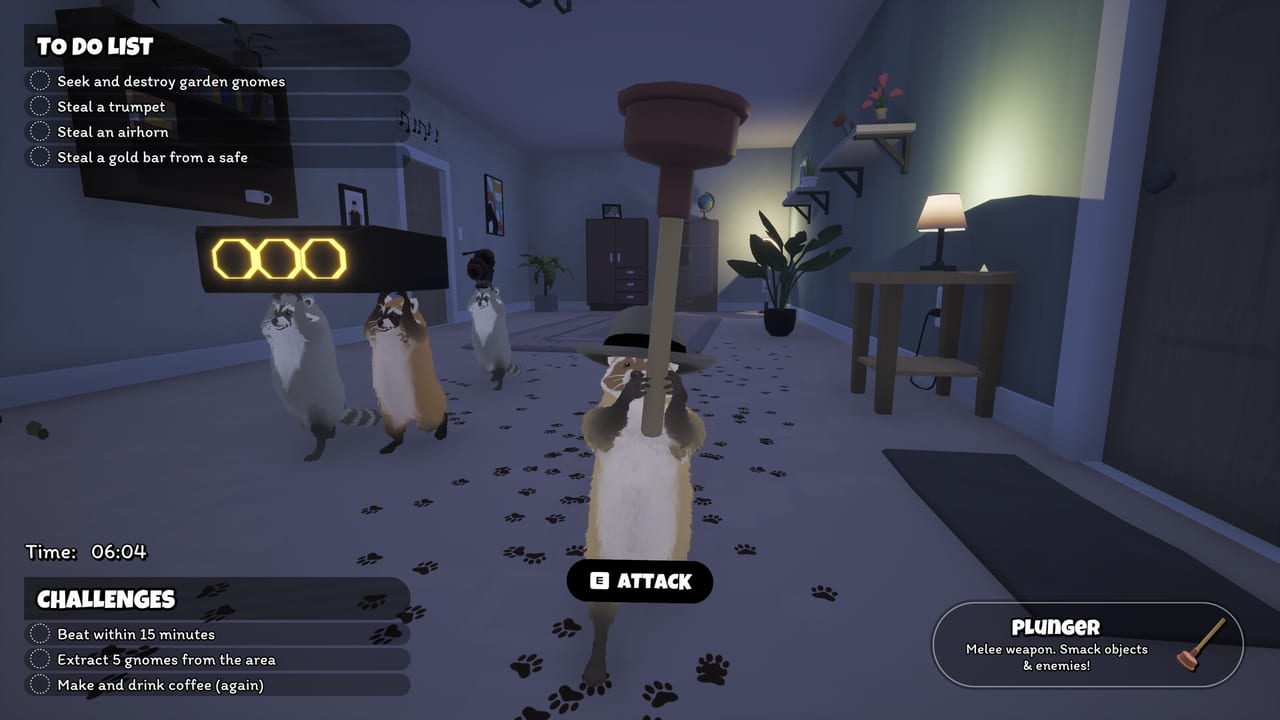
Dumpster Gang is famous for chaotic 2–4 player raccoon nights, but solo is fully supported and worth mastering. Playing alone teaches object priority, route discipline, and Exterminator respect in a way that loud lobbies hide. This solo guide assumes you already installed the free demo and finished basic orientation from Getting Started. If you have not cleared tutorial plus suburban, farm, and forest once, skim the demo walkthrough first.
Coyote House Games and Curve Games designed a sandbox where you climb walls, crawl vents, pick up and throw almost everything, smash for loot, and haul heavy scores. In solo, “almost everything” still applies—but heavy loot becomes a strategic choice, not a default. When chaos rises, John the Exterminator hunts with traps. Without teammates, capture means you must create your own escape path or avoid capture entirely. Console players waiting until March 2027 can still practice these habits in the PC demo today; PC full launch is December 3, 2026.
Solo philosophy: portable value over spectacle
Co-op thrives on spectacle—four raccoons tipping a room while someone films. Solo thrives on portable value: objects you can move alone, routes that loop to an exit, and smash bursts short enough that you can still leave. Measure a successful solo run by extracted loot and clean escapes, not by how many chairs you threw through windows.
Rules of thumb:
- If an object roots you in place for a long drag, skip it unless the exit is within a short, clear path.
- Smash after scouting, never before.
- Always keep a vent or climb line as a second exit.
- End the run early when pressure spikes; greed is how solo runs die.
Pre-raid checklist for one raccoon
- Confirm controls feel comfortable for climb and grab.
- Check system requirements if frame time spikes during smash spam.
- Equip a skin or emote you like—morale matters on long practice nights.
- Decide a chaos budget: quiet, mixed, or loud experiment.
- Name a hard extract trigger (first trap sighting, first near-catch, timer, inventory feel).
Visit the hideout between runs to customize and chase hats with unique abilities; even without a published hat tier sheet, the habit of returning to base keeps progression visible. See Hideout and Hats.
Routing suburban, farm, and forest alone
Suburban home: Indoor clutter favors smash temptation. Scout the perimeter and second-story climbs first. Loot a ring that returns to your entry. Use vents to skip locked feelings and to break chase. Attempt at most one heavy near the door. If John arrives mid-ring, abandon the far rooms.
Farm: Open sightlines make long drags dangerous. Favor structure interiors for smash noise, then leave across short outdoor gaps. Use elevation on barns or equipment to break line of sight. Solo farm runs should feel like hit-and-run, not a moving company.
Forest training: Practice disengage. Climb, drop, and change direction. Keep rally points even in solo—pick a stump or rock as your mental reset if you get turned around. Forest is the best map to rehearse “leave the heavy” discipline.
Rotate maps nightly so you do not only learn suburban habits. The Guides Hub links every mode guide; after solo mastery, pressure-test the same routes with friends using the co-op guide.
Heavy loot without teammates
Heavy objects need teamwork in the fantasy pitch—and in solo that means you either stage them cleverly or skip them. Staging tips:
- Clear the path of junk before you commit to the drag.
- Move heavy pieces in short hops toward the exit, not one heroic marathon.
- Stop a heavy haul the instant traps appear; a half-moved sofa is not worth a cage.
- Treat heavies as optional challenges after you already banked portable loot.
If a future patch or full-game tool softens solo heavies, revisit this section—until then, assume official copy is correct: heavy loot needs teamwork, so solo players optimize around that constraint instead of fighting it.
Exterminator survival when nobody can rescue you
Read Escape the Exterminator for the full John primer. Solo-specific notes:
- Keep chaos lower than you would in a four-stack unless you are deliberately training escapes.
- Never smash in a dead-end room without a climb or vent behind you.
- If captured with no rescue possible, focus on whatever escape or retry the demo affords—then shorten your next route.
- Use throws as personal distractions: toss an object one way, leave the other.
Solo is the best teacher for trap awareness because nobody is talking over the audio. Headphones help. After a failed chase, write one sentence about what blocked your exit; fix that on the next run.
Practice drills (20–30 minutes each)
- Quiet suburban: No unnecessary smash; extract with a light bag.
- One-heavy farm: Bank portables, then attempt a single staged heavy.
- Forest escape only: Ignore loot value; practice breaking chase for ten minutes.
- Vent tour: Clear a map using vents as primary travel, doors as backup.
- Hideout night: Skip raiding; customize raccoon, place stolen junk, inspect hat unlock progress.
These drills beat repeating the same loud clear. Mid-article gameplay video can show pacing; match that energy only when your exits are already planned.
When to switch back to co-op
Solo sharpening makes you a better teammate. Switch to co-op when you want heavy scores, rescue theater, and split roles. Bring solo habits with you: call exits, refuse pointless dead-end smashes, and treat captured friends as the new primary objective. If your friends only ever play stacked, send them this page so at least one person understands portable-value routing.
Launch and platform notes
PC (Steam, Xbox on PC, PC Game Pass) launches December 3, 2026. PS5, Xbox Series X|S, Nintendo Switch 2, and Xbox Game Pass consoles follow March 2027. Solo tactics transfer; only bindings change—keep tools handy. Track timing on updates and release date. Community and storefront links: links. Official site playdumpstergang.com; Discord discord.gg/dumpstergang; Steam full game 2870790; demo 4895870.
Related guides
- Guides Hub
- Getting Started
- Demo Walkthrough
- Co-op Guide
- Escape the Exterminator
- Hideout and Hats
- Tier list for quick priorities when more rankings exist
Play one intentional solo session this week even if you main co-op. Dumpster Gang’s sandbox rewards raccoons who know when to smash—and when to leave the sofa behind.
Frequently Asked Questions
Quick answers for Dumpster Gang players.
Is Dumpster Gang good solo?
Yes. Solo is supported alongside 1–4 player co-op. You will skip or carefully stage some heavy loot, but climbing, vents, smash-and-grab, and Exterminator pressure all work alone.
Can I complete heavy loot objectives solo?
Heavy loot is designed around teamwork. Solo players should stage short drags near exits or skip heavies after banking portable valuables.
What happens if the Exterminator catches me in solo?
Without teammates you cannot rely on a rescue. Play cleaner routes, keep exits open, and study the Escape the Exterminator guide for trap and chaos control.
Should I learn solo before co-op?
Learning both helps. Solo builds discipline; co-op teaches hauls and rescues. Use the demo to practice each mode on suburban, farm, and forest maps.